
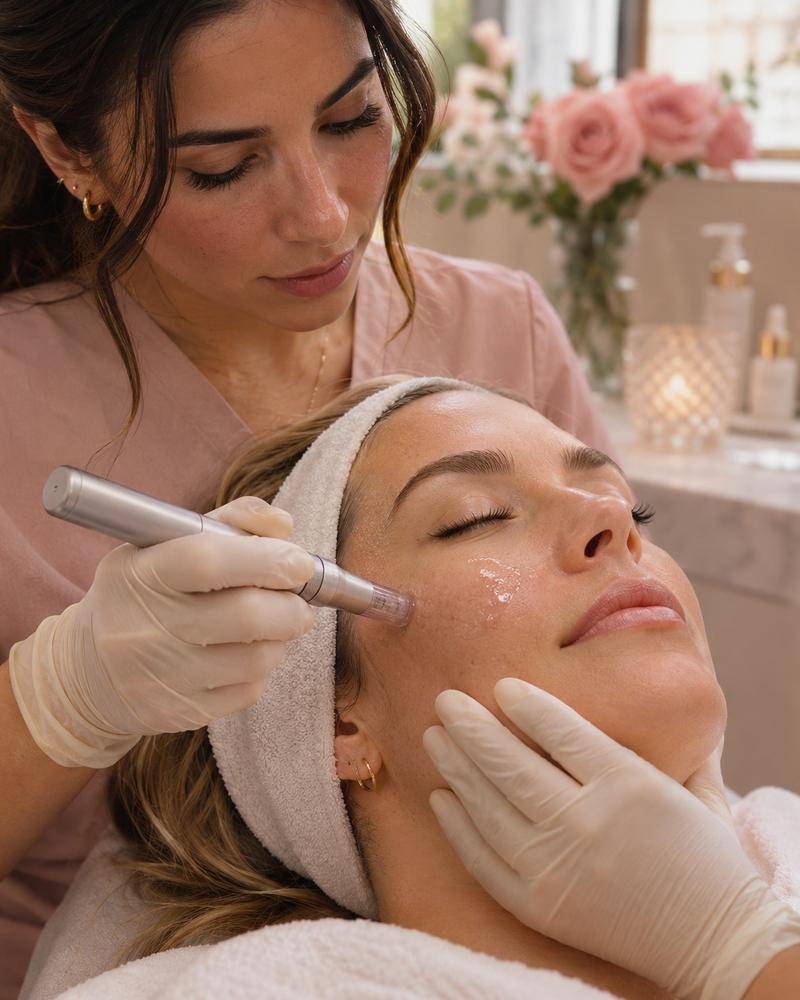
Why can needling set off a rosacea flare?
Rosacea skin tends to react strongly to heat, friction and irritation, and microneedling involves all three to some degree. Each session creates controlled injury, and the normal healing response includes redness, warmth and swelling that can last longer in reactive skin.
Visible blood vessels and a weakened skin barrier can add to the problem. Serums applied during a session may also sting more on rosacea skin, so ingredients matter as much as needle depth.
When should you wait or skip microneedling?
Waiting is the usual advice whenever skin shows active pimples, burning, stinging or a fresh flare, because needling across inflamed areas can make symptoms worse and may spread bacteria. Open sores or broken skin are also a reason to postpone.
Tell your provider about prescription creams, recent antibiotics, isotretinoin use and any history of scarring. Pregnancy and some medical conditions can also change the advice, so raise them with your doctor.
What should you ask a doctor before booking?
Useful questions for a dermatologist include whether your rosacea is well controlled, how long your skin should stay calm before any procedure, and whether your current medication needs to be paused. Ask too about signs that should stop treatment.
A written note or a list of your products makes the conversation at a consultation easier. Our microneedling page explains how a visit works, and our face treatments page lists other options to ask about.
What should aftercare look like if a doctor says yes?
Aftercare for reactive skin usually means a mild cleanser, a plain fragrance-free moisturizer and daily mineral sunscreen, with heat, alcohol, hot showers and hard exercise kept to a minimum for the first few days. Follow any instructions your doctor or provider gives you.
Hold off on acids, retinoids and scrubs until your skin has settled. Contact your provider or doctor if redness, burning or bumps get worse instead of fading.