
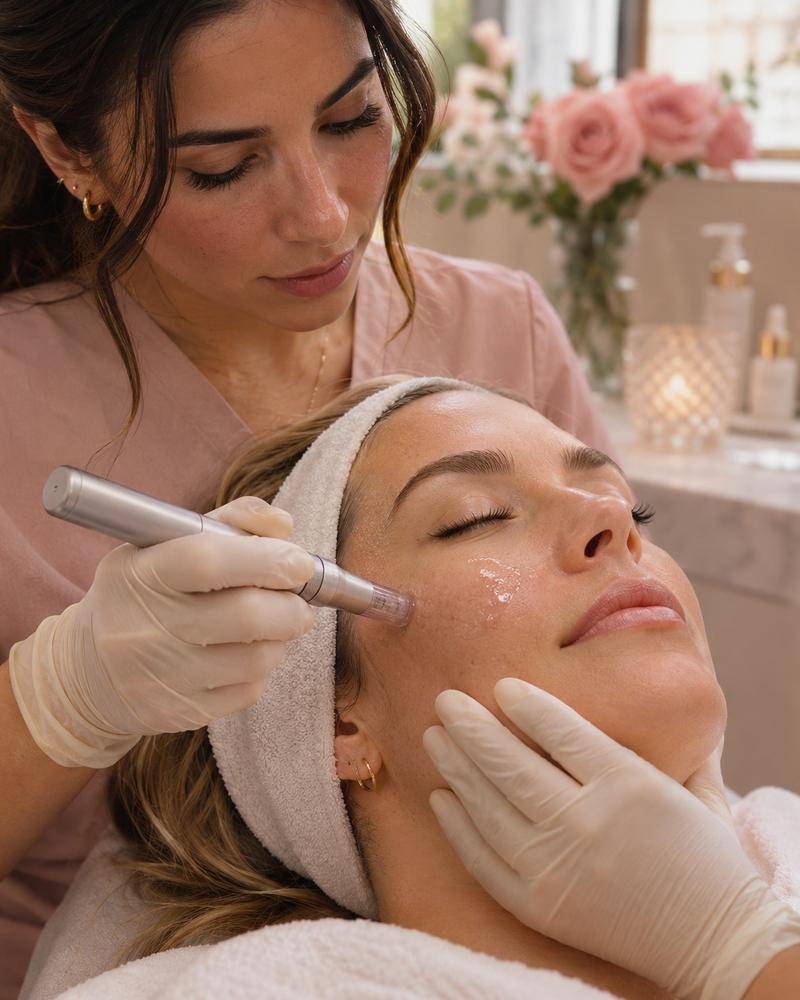
What happens during a microneedling with PRP appointment?
A typical visit starts with cleansing and a numbing cream, followed by a small blood draw from your arm. Your blood is spun to separate the plasma, and the provider then needles the skin and applies the PRP.
Expect the whole visit to take longer than regular microneedling because of the blood draw and preparation. Your provider will explain aftercare, including how to protect the skin from sun in the following days.
What does research say about results?
Small studies, mainly on acne scars, suggest adding PRP to microneedling can give somewhat better results than microneedling alone, but study sizes are small and methods differ, so the evidence remains mixed.
Results vary with the concern, skin type and number of sessions. A series of about three sessions spaced four to six weeks apart is common. PRP use on skin is generally considered off-label, so ask what realistic improvement looks like.
Who should avoid or delay treatment?
People with active skin infections, inflamed acne in the area, blood or platelet disorders, or a tendency to form raised scars are usually advised to avoid or delay treatment until a doctor has reviewed them.
Tell your provider about blood thinners, recent isotretinoin use, pregnancy, breastfeeding, immune conditions and any history of cold sores. Talk to your doctor if you are unsure.
What does recovery usually look like?
Redness similar to a mild sunburn is common for one to three days, and some people notice tightness, light flaking or small bruises. Most people return to normal routines soon after, with gentle skincare at first.
Daily sunscreen matters while skin heals. Your provider may ask you to avoid makeup, heavy exercise and active skincare ingredients for a short time. Contact your provider about increasing pain, pus or spreading redness.