
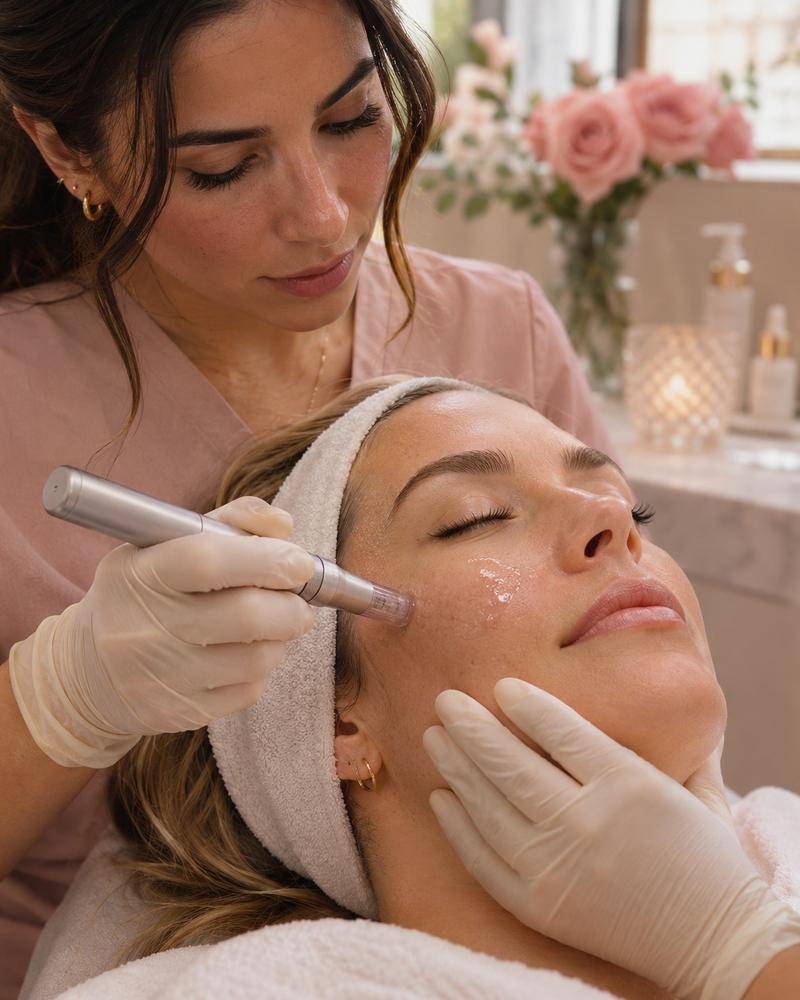
When does microneedling suit scars and texture?
Microneedling often suits shallow acne scars, rough texture and large-looking pores, because the result depends on collagen built slowly under the surface. A common plan is three to four sessions about a month apart, with changes that continue for several months.
The surface stays mostly intact, so many people return to normal routines within a day or two. Sun protection still matters while the skin settles. See our microneedling page for how a visit works.
When might a resurfacing laser be the stronger option?
Ablative laser resurfacing can do more for deeper acne scars, heavy sun damage and coarse wrinkles, since it removes outer skin and heats the layers below in a single session. Results vary, and a doctor should assess the scars first.
Non-ablative lasers sit in between. They are gentler, often take several sessions, and recovery is usually a few days. We describe laser resurfacing here as general information, so ask a dermatologist whether it suits your skin.
How does recovery change between the two?
Recovery after microneedling usually means a day or two of pink skin and some light flaking. Recovery after an ablative laser can mean a week or more of raw, healing skin, with redness that may last for weeks or months.
The deeper the treatment, the higher the chance of infection, scarring and lasting pigment changes. Ask any provider how the plan would change for your skin tone, your medications and any history of cold sores.
Can someone use both over time?
Some people do use both, planned by a doctor and spaced well apart, so the skin has time to recover between treatments. Doing both close together can overload the skin barrier, and no single order suits every scar.
Bring any past treatment records to your consultation. Recent laser work or acne medication such as isotretinoin can change what is safe to do next.