
Why is melasma harder to treat than other dark marks?
Melasma pigment can sit at more than one depth in the skin, and pigment cells stay easily triggered by sun, visible light, heat and hormones. Fading a patch does not change those triggers, so color can return after treatment stops.
Pregnancy, birth control and some other medications are common links. Ask your doctor about these before starting a procedure, particularly if you are pregnant or breastfeeding.
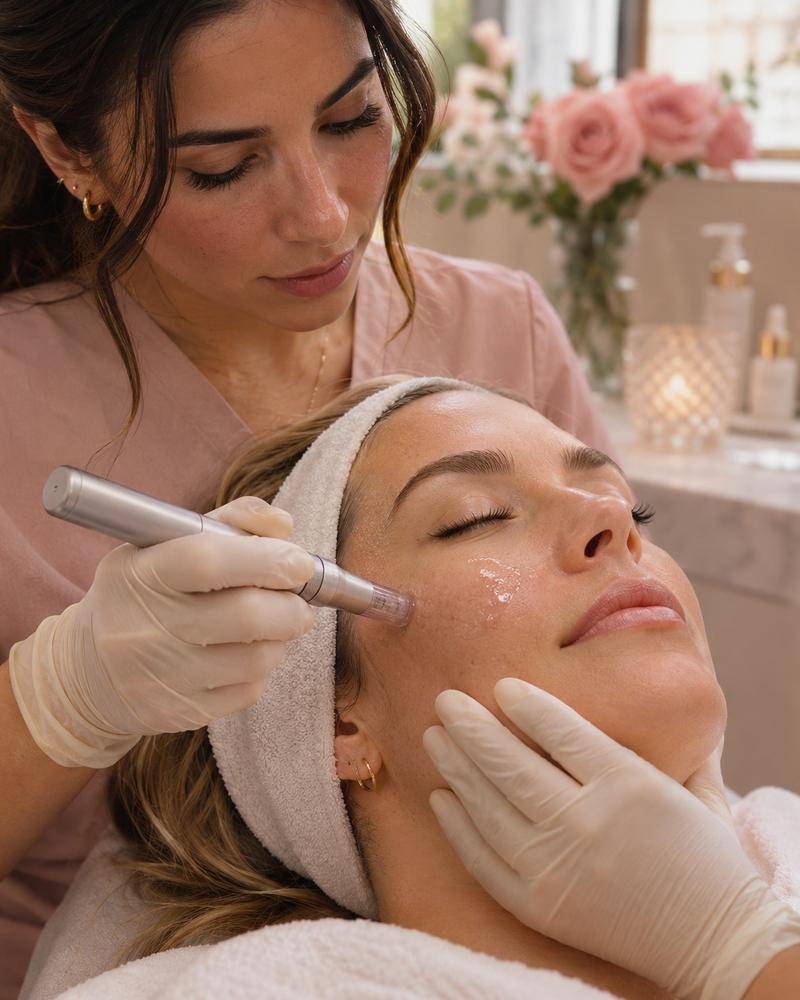
What does research say about needling for melasma?
Published studies are mostly small, and many combine shallow needling with a topical such as tranexamic acid or a lightening cream. Some report improvement, yet the designs vary widely, so it is hard to say how much came from needling alone.
Treat these findings as a reason to ask questions. A doctor can tell you whether a prescription should come first, which is common advice for melasma.
Can needling make melasma darker?
Darker patches are possible because any injury or inflammation can stimulate pigment cells, and melasma skin reacts easily. Deeper settings, heat, sun exposure soon after a session and harsh aftercare products can all raise the chance of this happening.
Tell your provider right away if patches look darker after a session. Pausing further treatment and speaking to a doctor is the sensible next step.
Where does a chemical peel fit in?
Light chemical peels are another option often discussed for melasma, since they speed up shedding of pigmented surface cells. Strong peels are usually avoided because of the higher risk of irritation and new dark marks, especially on deeper skin tones.
Peels and needling should not be stacked in the same week. Our microneedling and chemical peel pages explain how each visit works, and a consultation is the place to plan an order.