What happens to your lashes during a lash lift?
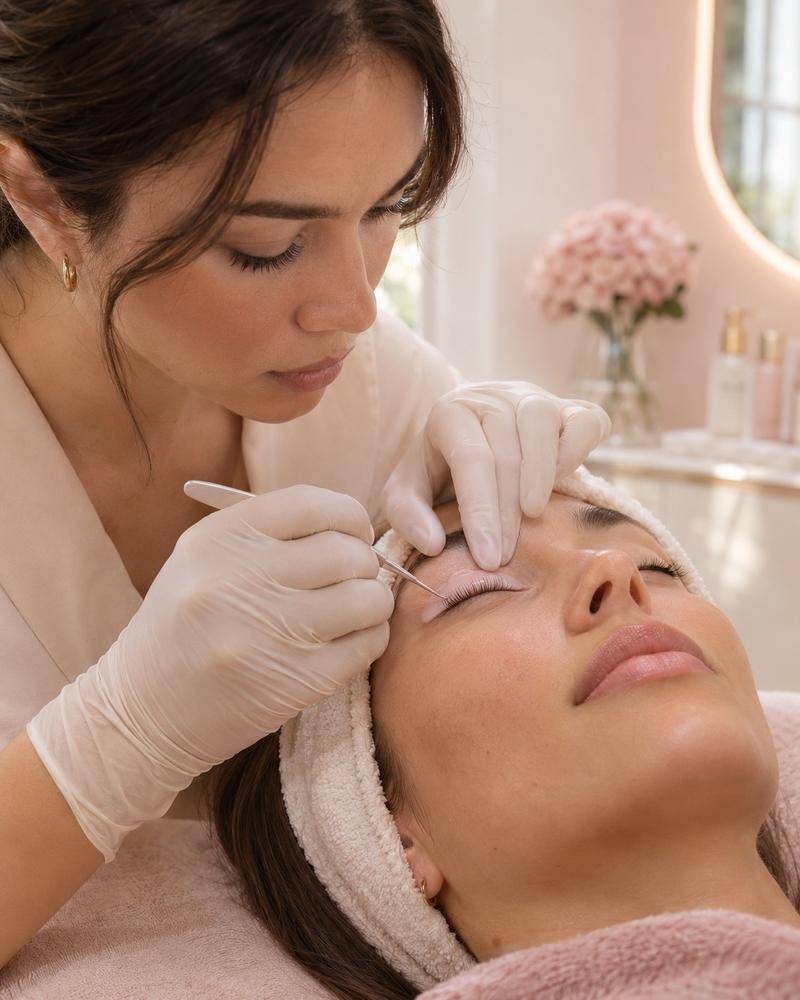
Perming solution loosens the bonds that give each lash its shape, the lash is curled over a shield, and a second solution sets the new shape. Your eyes stay closed throughout, and the lash itself is chemically changed for its remaining life.
The curl grows out as lashes shed naturally, usually within about six to eight weeks. Lashes that get repeated chemical treatment can become drier, so spacing matters more than any single appointment.
What are the main risks of a lash lift?
Redness, itching and watery eyes are the reactions people report most often, and they usually settle quickly. Allergic contact dermatitis can cause swelling of the eyelids, and it can appear even when earlier treatments went without any trouble.
Less often, solution reaches the eye and causes a chemical injury. Over-processing can also leave lashes frizzy, too curled or broken. If your eyes hurt, your vision changes or swelling gets worse, rinse with clean water and get medical care the same day.
Who should ask a doctor before a lash lift?
Anyone with a current eye infection, stye, blepharitis, severe dry eye or recent eye surgery should ask a doctor before booking, and most providers will ask you to wait. The same applies if you have reacted to hair dye, perms or adhesives.
Research during pregnancy and breastfeeding is limited, and many providers suggest waiting or getting your doctor's advice first. Take out contact lenses before the appointment and tell your provider about any allergies or eye medication.
How can you lower the risk?
Ask about the technician's training, whether a patch test is available and how long the solutions stay on your lashes. Timing should be adjusted to your lash type, since fine lashes generally need less time than coarse ones.
Keep lashes dry for the first 24 hours, avoid rubbing your eyes and leave at least six to eight weeks between lifts. See how a session works on our lash lift page, or read about another option on our eyelash extensions page.